
It’s time again for my annual look at animated cartoons and comics that should’ve entered public domain in 2026 under their original copyright terms, but didn’t—thanks to retroactive extensions to copyright lengths.
If you’re looking for the previous years’ posts:
The usual criteria
My usual statement about United States copyright lengths:
Under the copyright laws that existed from 1909 through 1978, works could be copyrighted for a single 28-year term, with one 28-year renewal allowed, or a total of 56 years. This was deemed sufficient for most of the 20th century. It also allowed for the creation of a large amount of the entertainment we still enjoy today.
If the former laws were still in effect, material created in 1969 would be entering the public domain in 2026. Instead, copyright lengths were retroactively extended in 1976 and again in 1998, thanks to heavy lobbying by Disney and other wealthy interests. As such, it’s now a ludicrously long 95 years for most corporate works, including “work for hire” creations; most movies and TV shows fall under this. For creator-owned works, such as this blog, it’s the life of the author plus 70 years. Thus, corporate works created in 1969 won’t enter the public domain until January 1, 2065.
For more about the current state of copyright law and all material (not just cartoons) entering public domain in 2026, visit Duke University’s Center for the Study of the Public Domain (CSPD) page.
Below is a list of cartoons created in 1969 that should’ve entered the public domain in 2026 under their original copyright terms.
Comics
For more, see Wikipedia’s 1969 in comics page.
Archie
- Harvey Kinkle
DC Comics
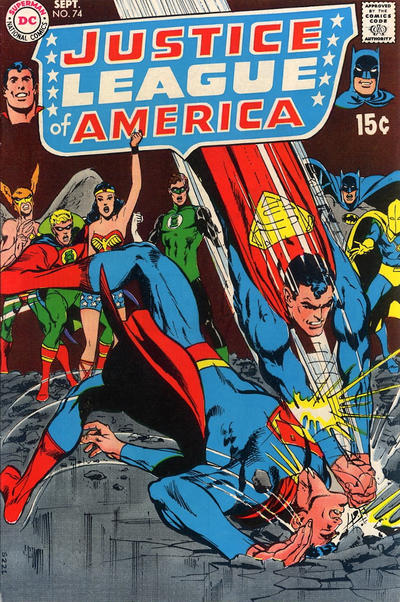
- Abel
- Batman:
- Mrs. Chilton
- Daphne Pennyworth
- Debbi (from “Date With Debbi” and “Debbi’s Dates”)
- Firehair
- Jason Bard
- The Losers (as a unit; its members all first appeared earlier)
- The Nightmaster
- Superman of Earth-Two (while the actual Golden Age Superman would’ve long since entered public domain, the Superman of Earth-Two is based on said version for storytelling/continuity purposes, with several retcons/elements added)
Marvel
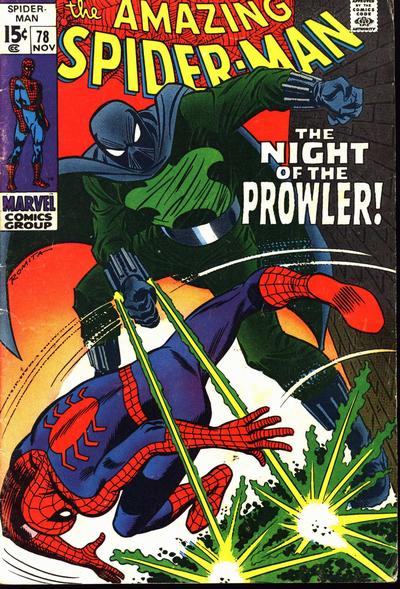
- Adamantium
- The Falcon (Sam Wilson)
- The Grandmaster
- The Guardians of the Galaxy:
- Charlie-27
- Major Victory
- Martinex
- Yondu
- Man-Ape (M’Baku)
- Sauron
- Spider-Man:
- Prowler (Hobie Brown)
- Silvermane
- Squadron Sinister:
- Doctor Spectrum (Kinji Obatu)
- Hyperion (Zhib-Ran)
- Nighthawk (Kyle Richmond)
- Whizzer (name later changed to Speed Demon)
- The X-Men:
- Havok
Animation
For more, see Wikipedia’s 1969 in animation page.
Movies
- A Boy Named Charlie Brown
Theatrical shorts
- The final Golden Age Looney Tunes shorts were released in 1969, including:
- The Great Carrot Train Robbery (the final short featuring new characters Bunny and Claude, rabbit parodies of Bonnie and Clyde)
- Fistic Mystic (starring Merlin the Magic Mouse)
- Rabbit Stew and Rabbits Too! (the only short starring new characters Quick Brown Fox and Rapid Rabbit)
- Shamrock and Roll (starring Merlin the Magic Mouse)
- Bugged by a Bee (starring Cool Cat; the final Looney Tunes short)
- Injun Trouble (starring Cool Cat; the final Merrie Melodies short, and final Golden Age theatrical short; no longer shown on American TV due to Indigenous stereotypes, as its title alone indicates)
TV shows
- Cattanooga Cats:
- The Cats themselves (Country, Kitty Jo, Scoots, Groove)
- Around the World in 79 Days
- It’s the Wolf (Mildew Wolf, Lambsy, Bristlehound)
- Motormouse and Autocat
- Dastardly and Muttley (Zilly, Klunk, the General, Yankee Doodle Pigeon)
- Here Comes the Grump
- Hot Wheels (based on the Mattel toyline; features one of the first Black recurring characters in an American TV cartoon)
- The Perils of Penelope Pitstop (Sylvester Sneekly, the Bully Brothers)
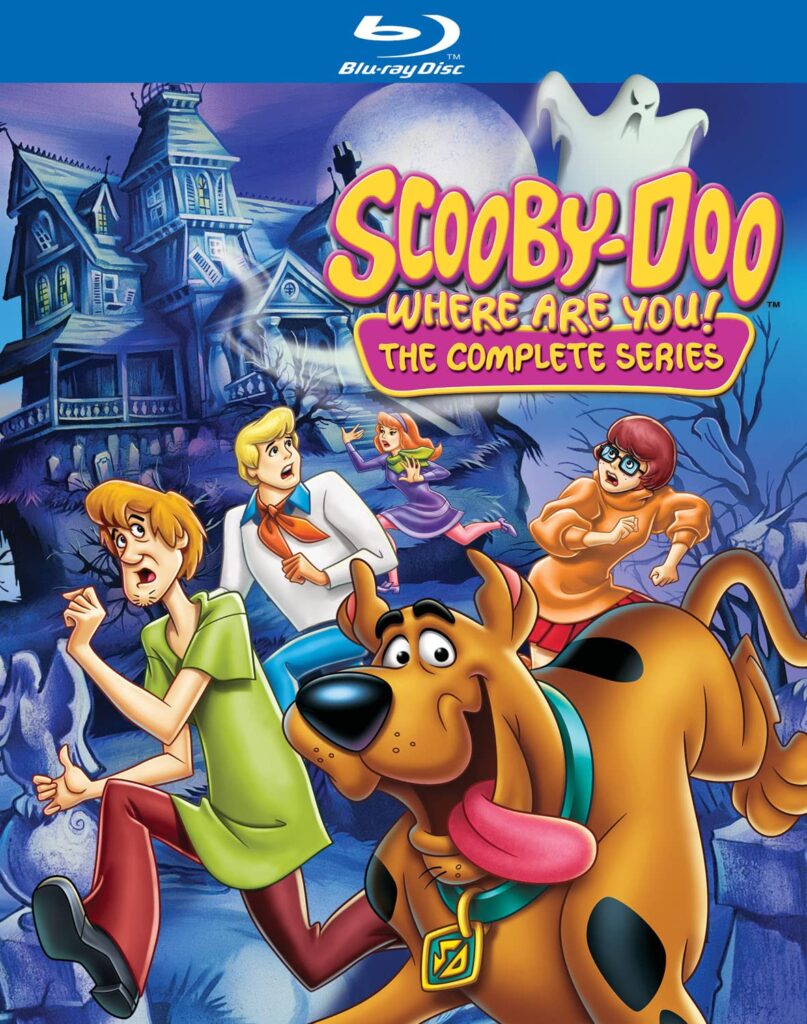
- Scooby-Doo Where Are You! (Fred Jones, Daphne Blake, Velma Dinkley, Norville “Shaggy” Rogers, and Scooby-Doo; the gang’s last names, and Shaggy’s real first name, aren’t given until the 1980s spin-offs)
- Sesame Street (live-action, but features animated segments)
- Skyhawks (based on a Mattel toyline; this blog summarizes why “Skyhawks” and “Hot Wheels” were short-lived, running afoul of children’s TV ad limits, which were repealed when Reagan took office in 1981.)
- The Smokey Bear Show
TV specials
- Frosty the Snowman
- It Was a Short Summer, Charlie Brown
What’s actually entering the public domain in 2026?
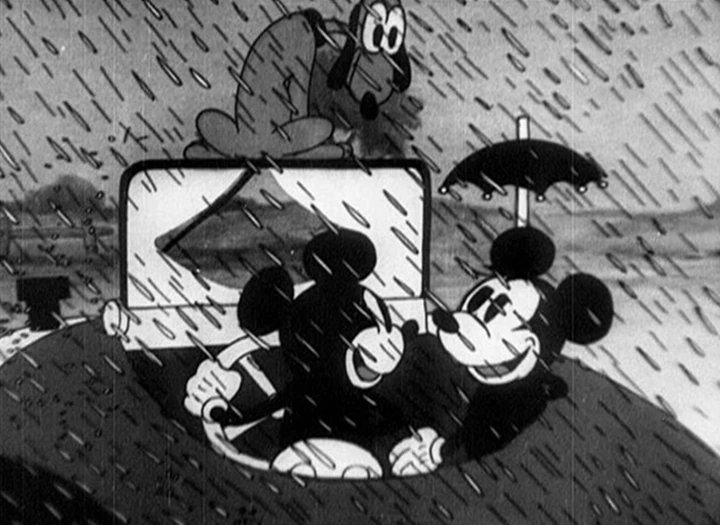
As usual, the above cartoons are “what should have been.” But as for what’s actually entering public domain on January 1, 2026, see below.
Betty Boop
Betty Boop debuted in the 1930 Fleischer Studios short “Dizzy Dishes,” initially as a doglike person (since she was fellow Fleischer character Bimbo’s love interest). Betty is first depicted as a human in the 1931 short “Mask-A-Raid.”
Blondie and Dagwood
The long-running newspaper strip “Blondie” debuted in 1930, featuring Blondie and Dagwood (initially as a dating couple). The kids, neighbors, and mean boss (who’s an embodiment of why the National Labor Relations Board exists) don’t come until later.
Flip the Frog
An animated series by Mickey Mouse co-creator Ub Iwerks that ran from 1930 to 1933.
Pluto
Pluto first appeared in two 1930 shorts: “The Chain Gang,” where he’s part of a pair of unnamed dogs, and “The Picnic,” where he’s shown as Minnie’s dog “Rover.” Pluto is officially named and becomes Mickey’s dog in the 1931 short “The Moose Hunt.”
Other
Nine Mickey Mouse shorts and ten “Silly Symphonies” shorts enter the public domain this year.
Several music compositions (i.e. sheet music, not the recordings) enter public domain this year, including a song featured in the “SpongeBob SquarePants” pilot, “Livin’ in the Sunlight, Lovin’ in the Moonlight.” Sorting out music rights to the song is why the pilot isn’t on the season one DVD set, though it’s included as an extra on the third and fourth seasons DVD set.
The first “Looney Tunes” shorts debuted in 1930, featuring their first star, Bosko. However, these shorts apparently entered the public domain decades ago due to a lack of copyright renewals in the 1950s (as was required at the time). Again, Warner Bros.’s management has more often than not seen their animation division as disposable, from the Warner brothers themselves to David Zaslav.
Conclusion
If not for retroactive copyright extensions, Scooby-Doo, the “Sesame Street” cast, the Earth-2 Superman, and Sam “The Falcon” Wilson would be in the public domain as stock characters anyone could use. Instead, they won’t enter public domain until 2065. To paraphrase Sauron’s famous line: “But I don’t want to have fair copyright lengths; I want to extend copyright to last forever minus a day.”
Many of these characters are still in use by their corporate owners, and embedded in popular culture. “Frosty the Snowman” airs annually at the holidays, and is featured on plenty of merchandise; Sam Wilson (as both the Falcon and Captain America) stars in plenty of movies and Disney+ TV shows; and of course, Scooby-Doo is a cash cow franchise for Warner Bros.
Still, the public domain continues to be active, with new entries every year. Next year (2027) will see material from 1931 enter the public domain, including the properly-named Pluto, comic strip character Dick Tracy, and more Mickey Mouse shorts.
Image, clockwise: “Scooby-Doo” (Warner Bros.); “Spider-Man & the X-Men (2014) #2” (March 2015) (art by Marco Failla) (Marvel); Rapid Rabbit and Quick Brown Fox (Warner Bros.); “Captain America and the Falcon” (vol. 1) #7 (November 2004) (art by Joe Bennett and Jack Jadson) (Marvel); “Frosty the Snowman” (DreamWorks Classics); “Action Comics” #484 (June 1978) (art by Jose Luis Garcia Lopez) (DC Comics)
Related Posts


And people still don’t recognize these extensions for what they are: The 20’th Centuries most powerful entertainment companies rigging the whole game so they won’t have to compete.