The 2010s saw a large number of changes in the American TV animation landscape. While I’ve written about animation in the decade overall, below, I take a look at the prevailing trends and influences in TV animation in the 2010s.
I define the 2010s in animation as starting in 2010 with the debut of “Adventure Time.” I’d put the end of the decade as 2019, with the launch of Disney+ formally starting the “streaming wars.” (Not to mention the start of the COVID-19 pandemic in 2020.)
Simplified, flat animation styles (“Adventure Time”)
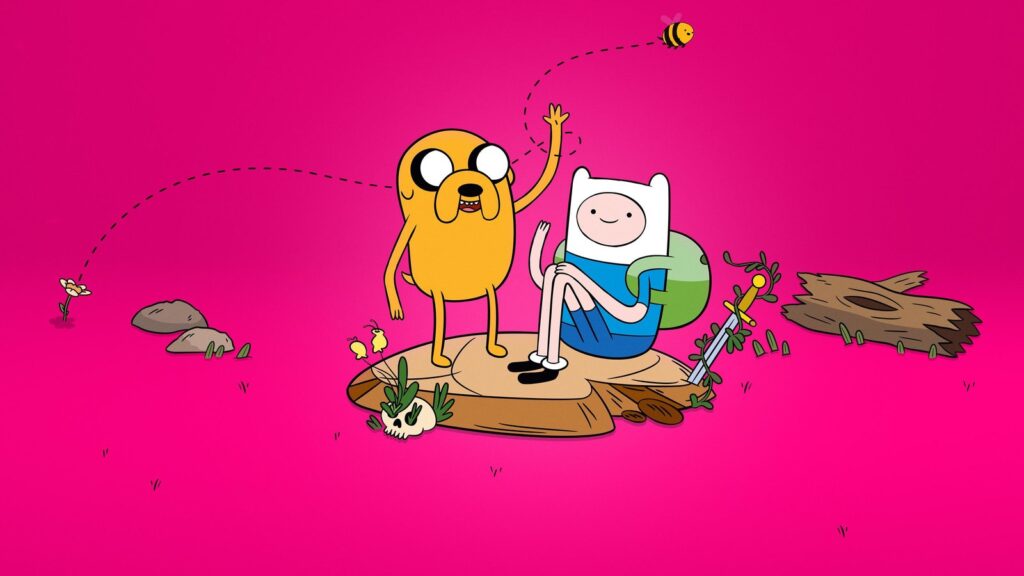
“Adventure Time” debuted on Cartoon Network in 2010, and soon became one of the most popular and influential cartoons of the 2010s.
One area of influence is the show’s animation style, which TV Tropes dubs “thin-line animation.” Elements of this style include: simplified, flat character designs; rounded limbs (similar to 1920s/1930s cartoons); and anime influences.
This style of animation became quite popular, showing up in a wide range of shows: “Regular Show”; “The Amazing World of Gumball” (mixed with other animation styles); “Steven Universe”; “Teen Titans Go”; “Gravity Falls”; the Mickey Mouse shorts that ran on Disney Channel and YouTube from 2013 to 2019; and so on.
I note that the decade also saw a general design trend towards simplified logos and icons, thanks in part to the popularity of smartphones.
While not a 2010s show, in 2020, a reboot of the 1980s series “ThunderCats” debuted. “ThunderCats Roar” only aired for one season, but it sparked a lot of debate online about its use of this animation style. For me, my history with “ThunderCats” is that it was a cartoon I watched as a kid, but hadn’t thought much about since then. That, and the character Panthro felt coded as “the Black guy” of the cast (apparently others felt similarly).
After the 2010s
Simplified animation styles still see usage into the 2020s (as seen in shows like “Jellystone!”), though the 2020s brought different animation styles influenced by the hit 2018 movie “Spider-Man: Into the Spider-Verse.”
Comedic adventure shows (“Adventure Time,” “Steven Universe”)

The 2010s saw a rise in the popularity of shows that mix comedy and adventure, instead of just pure adventure or comedic shows. “Adventure Time,” “Steven Universe,” “Star vs. the Forces of Evil,” and other shows mix both elements into their stories. That’s as opposed to 1980s action cartoons, when “GI Joe,” “He-Man,” and “Transformers” usually limited such humor to comedy relief side characters.
After the 2010s
Comedic adventure shows have continued into the 2020s. A few examples include Disney’s “The Owl House” and “Moon Girl and Devil Dinosaur.” There’s also been a number of reboots and revivals of 2000s and 2010s shows using this style.
The rise of continuity and ongoing storylines

The 2010s saw a rise in ongoing storylines and continuity, even in some comedic cartoons. Factors that led to this likely include anime (and its usage of ongoing storylines), as well as the rise of Netflix and binge viewing. Studios can’t assume anymore that viewers don’t have the attention span or intelligence to remember what happened in previous episodes.
“Gravity Falls,” “Star vs. the Forces of Evil,” “Steven Universe,” and other shows all have had ongoing storylines.
After the 2010s
Continuity’s still a thing in animation, even in children’s programs. Of course, episodic cartoons with minimal continuity still exist, particularly older cartoons still running such as “SpongeBob” and “The Simpsons.”
Reboots and revivals of older franchises

The 2010s saw a boom in reboots and revivals of older properties. I suspect it was Hollywood being, well, Hollywood; the boom in streaming services (by decade’s end) also led to a need for more material.
As such, the 2010s saw a lot of reboots, revamps, and variant takes on many old cartoons. “She-Ra,” “DuckTales,” “Peabody and Sherman,” and “Inspector Gadget,” among other cartoons, all saw reboots.
Modernizing aging properties can be a good thing if done well. Reboots also offer a way to introduce to new audiences modernized takes on classic characters, or change/drop any problematic elements from the original versions.
The downside of reboots, however, are their very nature. Instead of coming up with something original, studios are using their resources to reboot stuff we’ve already seen. For older viewers, expecting them to watch recycled versions of TV shows they saw years ago might feel off-putting or a waste of time. For younger viewers, the idea they can only have “hand-me-down” TV shows instead of something truly original also might be off-putting. Reboots also might make changes from the originals that are questionable or a turn-off.
After the 2010s
This trend is ongoing into the present day, with shows like “Johnny Test,” “The Proud Family,” and “Animaniacs” receiving revamps in the 2020s. However, the modern cartoons that have caught the most attention tend to be original ideas.
The rise of streaming and YouTube (and decline of cable TV)

In 2013, Netflix started producing original series and exclusives, as part of its shift from DVD-by-mail rentals to streaming. Early hits such as “Orange is the New Black” and “House of Cards” led to a boom in Netflix content. “BoJack Horseman,” which ran from 2014 to 2020, was the first major animated cartoon to become a hit primarily or exclusively on streaming, not a linear TV outlet.
As the 2010s wore on, more and more cartoons came to Netflix, Hulu, and Amazon Prime, both from cable channels and as originals. By decade’s end, cable TV started seeing a noticeable decline in subscribers. Streaming services were cheaper than cable, and also increasingly where new content debuted, versus cable channels.
This led to media conglomerates getting the idea of launching their own streaming services, featuring their vast libraries of content. The launches of Disney+ and Apple TV+ in 2019 started the “streaming wars.”
YouTube also saw a rise in popularity for animated content in the 2010s; preschooler cartoon “Cocomelon” became successful thanks to its YouTube channel. The debut of the iPad in 2010, plus the decade’s rise in smartphone usage, led YouTube to become a popular way for kids to watch content, for better or worse.
After the 2010s
More streaming services continued to launch in 2020 and beyond, including HBO Max, Paramount+, and Peacock. However, it’s the classic “Big Three” services (Netflix, Hulu, and Amazon Prime Video), plus newcomer (and now Hulu’s sister service) Disney+ that ultimately won the “streaming wars.” YouTube also continues to be the dominant online free video service.
Meanwhile, cable TV subscriptions (and ratings for the classic “Big Three” animation cable channels: Nickelodeon, Cartoon Network, and Disney Channel) have continued to decline, and definitely aren’t bouncing back.
Prominent LGBTQ characters

LGBTQ characters saw some increased usage in animation in the 1990s and 2000s, but often still got treated in stereotypical or belittling ways (closeted, as punchlines or victims, etc.). Even the longest running scripted primetime TV show of all time, “The Simpsons,” wasn’t above a gay bashing joke in one 90s episode, not to mention a problematic years-long series of transphobic jokes.
However, the 2010s saw a boom in prominent and well-written LGBTQ characters in TV animation, especially in children’s cartoons. All this helped normalize ongoing LGBTQ characters, and not just appearing in “very special episodes.” Real-life cultural changes also helped, such as the legalization of same-sex marriage nationwide in the United States in 2015. An increasing number of outlets for animation outside of the major studios/cable channels also helped.
Shows in the 2010s that featured LGBTQ characters included: “The Legend of Korra,” “Steven Universe,” the Netflix “She-Ra” reboot,” “BoJack Horseman,” “The Loud House,” and “Arthur.”
After the 2010s
LGBTQ characters continue to show up in animation in the 2020s, with shows like “The Owl House” even making characters like Luz (who’s bisexual) the main stars.
However, I’m concerned the Trump administration pressuring companies to eliminate diversity efforts and engage in anti-LGBTQ practices might mean fewer LGBTQ characters in animation, especially children’s media. That said, I don’t see the days of gay bashing treated as a throwaway joke in cartoons coming back, as much as Trump and Project 2025 supporters wish otherwise.
Conclusion
If you’re wondering what I wrote about trends in the other decades in TV animation, see the following links:
Photo by Karlis Dambrans (Flickr / CC BY)
Related Posts


