
With the decade more than halfway over, the 2020s has seen its share of changes in TV animation. Below, I take a look at the prevailing trends in Western TV animation in the 2020s (as of 2025).
I define the 2020s’ start animation-wise with the launch of Disney+ in late 2019. (An alternative date: the outbreak of the pandemic in 2020.)
Streaming services and YouTube now dominate animation

Early in the decade, animation saw a boom in production. The pandemic gave animation a boost, as it could be done with easier COVID-19 safety precautions versus live-action media. Also, the boom in streaming services saw a demand for more content. However, the animation boom didn’t last, once pandemic restrictions eased; also, streaming services started to focus on profitability, leading to bad-for-customers consequences (content purges, price hikes, etc.).
That said, what has lasted is the dominance of streaming services. As IndieWire notes, kids have pretty much stopped watching linear TV, while their parents are increasingly ditching cable. While streaming has plenty of problems (including price hikes), for most people who aren’t hardcore sports fans, it’s still a better deal than traditional cable. A 2025 media study notes that the vast majority of new cartoons ordered are for streaming services. It also helps that streaming services and YouTube are creating original fare that wouldn’t air on Nickelodeon or Disney Channel. And, of course, cable channel ratings are cratering.
As such, the biggest animated TV shows of the decade have almost all come from streaming services or YouTube, and not cable or broadcast TV outlets. The traditional animation related cable channels’ ratings have plummeted over the 2020s to date, while their parent companies have seen a series of problems:
Warner Bros. Discovery
Cartoon Network is basically a zombie shell of its former self that’s over-reliant on 2010s-era shows, especially “Teen Titans Go.” Cartoon Network’s also been booted by Comcast to more expensive cable TV tiers. Meanwhile, Adult Swim’s eaten into Cartoon Network’s airtime.
Additionally, parent company Warner Bros. has changed hands. The current owners are indifferent-to-hostile about animation outside of Adult Swim and DC Comics fare, including infamously purging much of HBO Max’s animation catalog.
Paramount
Nickelodeon’s pretty much just “SpongeBob,” “Paw Patrol” and a few other shows. Meanwhile, Paramount itself has problems. Its recent sale to Skydance doesn’t promote confidence, nor does that Paramount is willing to pay a whopping $1.5 billion to shore up a single show, “South Park.” To paraphrase the Spider-Man meme/comic panel: “But with that kind of money, you could be the next DreamWorks!” “But I don’t want to be the next DreamWorks; I want to prop up a single problematic 90s-era cartoon.”
Paramount+ is a decent enough second-tier service, but all of its popular cartoons are oldies (“SpongeBob,” “South Park,” etc.) or based on older IP (“Star Trek: Lower Decks”).
Disney
Disney Channel is outright gone from several major cable systems; Wikipedia states as of 2023, it was in 70 million households, down from its peak of 100 million in 2011. While Disney+ is the most popular new service to emerge from the “streaming wars,” most of Disney+’s emphasis and marketing has been on the ‘Star Wars” and Marvel properties, including some of its animated fare (“Young Jedi Adventures,” Spidey and His Amazing Friends,” “X-Men ‘97,” etc.).
Currently, the most popular cartoon on Disney+ that isn’t based on pre-existing IP or a reboot/revival is “Bluey,” a third party show from Australia. Meanwhile, Disney itself has its own issues with changes in leadership, middling box office, etc.
Comcast
Comcast seems to be steady (despite cable TV’s massive decline), but Peacock isn’t exactly the most popular streaming service. DreamWorks and Illumination are still producing successful fare, but most of their biggest hits are based on older IP (“Despicable Me,” “How to Train Your Dragon,” “Super Mario Bros.,” etc.). Those two animation studios also are more prominent on Netflix than their own purported home, Peacock. That said, DreamWorks is one main source of a chunk of Netflix’s animated TV shows.
Summary
In general, all of the above studios seem heavily reliant on existing properties. While original in-house new shows have come along this decade (“The Owl House,” etc.), none have really taken the world by storm to the degree of “Bluey” or older shows like “Teen Titans Go”/”SpongeBob”/”Gravity Falls”/etc.
Meanwhile, streaming has seen a number of popular shows emerge: “Invincible” (Amazon Prime Video), “Hazbin Hotel” (Amazon Prime Video), “Arcane” (Netflix), “Kipo and the Age of Wonderbeasts” (Netflix), etc. “Bluey” itself is popular mainly due to running on Disney+.
Given the state of the above studios, I can see why viewers have turned to Netflix and the like for cartoons. Why watch a reboot of a show from 20-30 years ago (or shows from 20-30 years ago still running) when there’s original stuff from Netflix, YouTube content creators, etc.?
Anime and indie/smaller studios prominent

Thanks to streaming and YouTube, there’s been a boom in the prominence of non-traditional animated fare from third party, smaller and independent animation studios. Meanwhile, anime continues to be more popular then ever. A one-season mid-2020s CBS sitcom, “Poppa’s House,” had an episode referencing “Dragon Ball Z,” without any ridicule or cluelessness about anime one would expect from older mainstream media.
While it debuted in 2018, the most popular TV cartoon this decade to date is probably “Bluey,” the Australian cartoon that’s became a worldwide hit on Disney+. Meanwhile, one of the biggest hits produced within this decade is Netflix’s “KPop Demon Hunters,” a Sony animated film made for the streaming service.
While it’s a movie and not a TV show, “KPop” embodies many 2020s aspects:
- An anime-influenced animation style (plus influences from fellow Sony film “Spider-Man: Into the Spider-Verse”).
- It’s based in part on Korean pop music, a popular music genre originating from outside North America.
- The film’s produced by a non-WB/Disney/Paramount/Comcast animation studio (Sony).
- The film rose to fame via Netflix, the world’s most popular streaming service. Netflix also carries a lot of anime, per carrying a lot of international programming in general.
A boom in preschooler and adult animation, but fewer all-ages shows
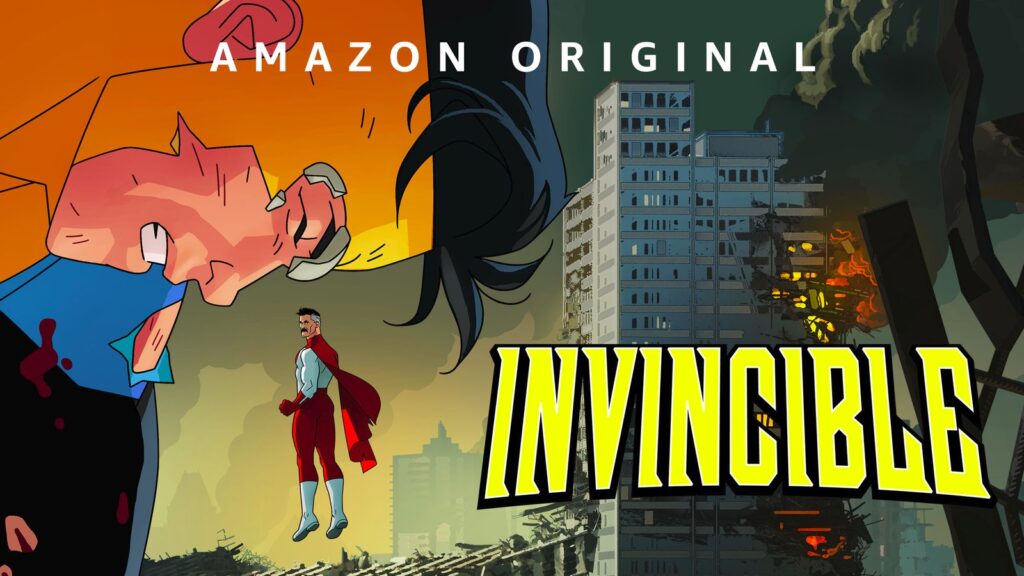
Mass media’s fractured modern state makes it hard to think of a fully made in the 2020s animated TV series that’s become massively popular. Also making this harder: all the examples I can think of are either aimed at preschoolers (“Spidey and His Amazing Friends,” “Bluey” (despite its large adult audience), etc.) or adults (Adult Swim fare, “Invincible,” etc.).
It’s apparently not my imagination. A 2025 animation study shows that there’s been a decline in the number of shows aimed at children being ordered. The study also notes that kids’ attention is split nowadays between YouTube, streaming services, and video games. Given every trend I noted above, as well as this decline in all ages shows, I can see why grade-schoolers and middle-schoolers are paying heavy attention to Netflix, YouTube, and “Fortnite,” which aren’t ignoring them.
Conclusion
As of this writing (September 2025), it remains to be seen what happens the rest of this decade. But so far, the trends point to streaming, YouTube, anime, and smaller/independent studios as the main driving forces for TV animation. The four major US media conglomerates, meanwhile, seem largely either on autopilot, trying to grapple with various problems (pointless mergers, debt, Trump, the changing media landscape, the death of cable TV, etc.), or are too reliant on older properties.
Photo by Collabstr on Unsplash
Related Posts