On Monday came some major media conglomerate news: Warner Bros. Discovery announced that it’s splitting itself into two separate companies.
While no official names have been announced, the two companies for now will be known as “Streaming & Studios” and “Global Networks.” The former will contain Warner Bros.’s movie and TV studios, DC Comics, HBO, HBO Max, Warner Bros. Games, plus Warner Bros. Discovery’s movie and TV libraries. The latter includes the various cable channels: CNN, Discovery (and Discovery+), Cartoon Network, Adult Swim, TNT, and TBS. The TNT Sports arm will be under Global Networks in the US, but Streaming & Studios internationally. Current WBD CEO David Zaslav will run Streaming & Studios (which I expect will carry a variant of the Warner Bros. name), while CFO Gunnar Wiedenfels will run Global Networks. (Wiedenfels, per Variety, seems to be another penny-pinching bean counter in Zaslav’s vein.) Global Networks will own 20% of the Streaming & Studios company. The split will be finalized by mid-2026.
One big thing about the split (that makes it different from Comcast‘s similar split): Warner plans to dump most of its sizable debt (almost $38 billion) onto Global Networks, a move that’d make a private equity firm proud.
My thoughts

Of course, the Warner-Discovery merger is something that shouldn’t have happened in the first place. Unfortunately, Warner Bros.’s century-long history is full of instances of the company being bought, sold, split apart, and otherwise treated as interchangeable intellectual property (IP). (The company’s been sold twice in the past decade.) Warner’s various owners rarely seem to learn from any of this. To quote Deadline:
Ultimately, most pundits think the end game is likely a deal for one or both. Wiedenfels said both companies will be “free and clear” for M&A [merger and acquisition] the second the split is complete, with no waiting period.
This might be one reason for Warner’s woes. It’s hard to plan long-term when the owners don’t seem to plan to stick around, or care about having a steadily profitable business (versus a constant “line goes up” mentality).
Still, I assume the Streaming & Studios side will ultimately survive. It contains the core aspects of Warner Bros.: its TV and movie studios, plus the film libraries and various intellectual properties… everything from Looney Tunes to DC Comics. Animation-wise, they’ll also retain ownership of the various animation studios, such as Warner Bros. Animation, Hanna-Barbera Studios Europe, and Cartoon Network Studios. (It’s unclear if Cartoon Network Studios will keep its name post-split?)
If anything, the “de-merger” brings Warner back to where it was before the launch of The WB in 1995 and the Turner merger in 1996: a media conglomerate that owns HBO and various IP, but doesn’t have to worry about managing multiple TV networks. And of course, DC Comics likely won’t be affected by this; Batman fans will still get their usual metric ton of Bat-content, even if it’s not distributed through Cartoon Network or HBO Max. Those over a certain age will recall when “Batman: The Animated Series” aired on Fox.
It’s the Global Networks company, made up of the former Turner and Discovery networks like CNN and HGTV, that has a more questionable future. Not only are cable TV subscriptions in a state of rapid decline, but the cable channels won’t have traditional access to their libraries. That’s on top of dealing with a massive pile of debt and TNT losing its NBA rights.
Still, in a “best case scenario,” I assume the cable channels will continue to keep some ties to the Streaming & Studios company, similar to how Fox still airs “The Simpsons” (now owned by Disney). That said, I expect the cable channels to start relying more on third-party content. Cartoon Network Is an example; back in the 2000s and early 2010s, the channel’s lineup had a heavy amount of shows from Canadian counterpart Teletoon (which, ironically, is now defunct/a Canadian version of Cartoon Network). The non-American versions of Cartoon Network also air plenty of third-party content.
Warner Bros. Discovery also has already been sending its content to competitors’ networks or streaming services. As I’ve written before, much of their animation catalog is now anywhere besides HBO Max: Looney Tunes is on MeTV; the 2010s-era Cartoon Network library is on Hulu; and the latest Batman animated series, “Batman: Caped Crusader,” is on Amazon Prime Video.
Conclusion
Ultimately, I’m not optimistic about the long-term future for the cable channels, especially smaller ones like Boomerang. Between the massive debt, several channels already being shadows of their former selves (such as Cartoon Network), and existing management, Global Networks (or whatever it ends up called) has a tough road ahead.
Meanwhile, “Streaming & Studios” having the core Warner IP should fare better, but also has its own challenges—mercurial management, a series of hit and miss films, questionable decisions (“Harry Potter” as their main “family franchise”), and so on.
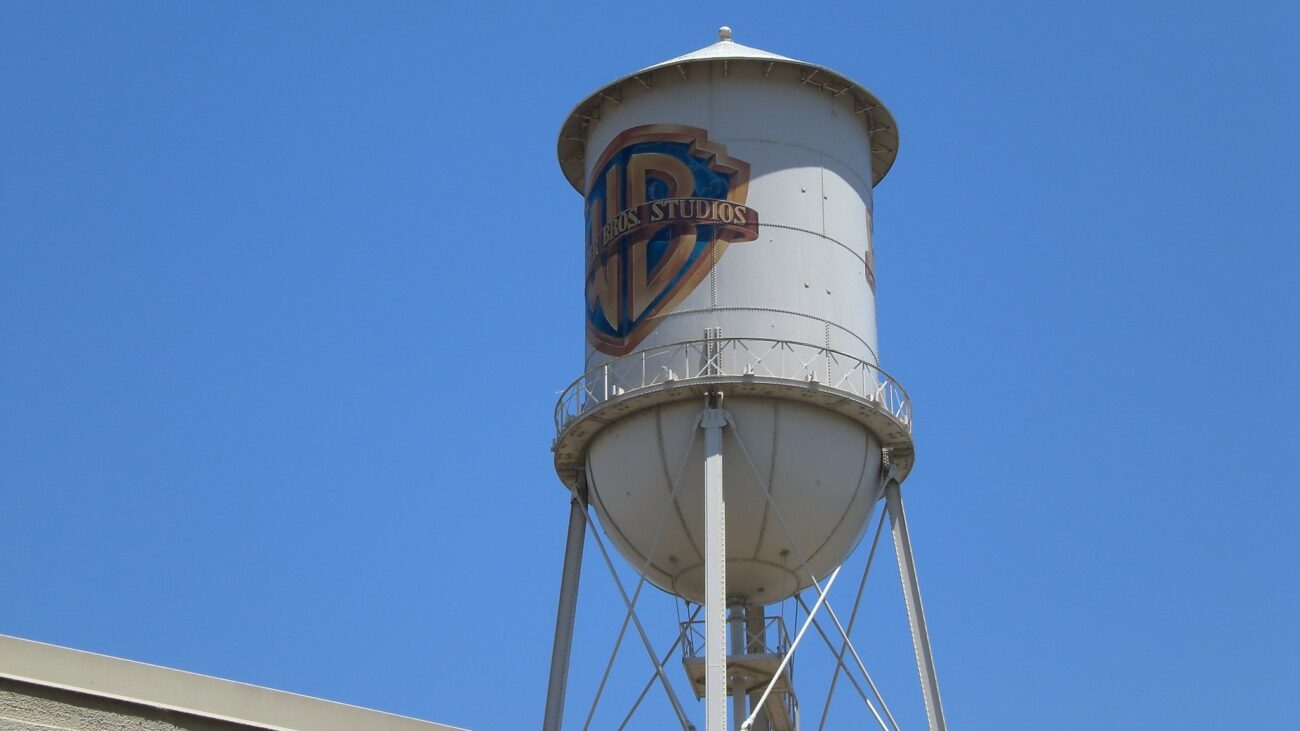
“Warner Brothers tour” by Alan Light is licensed under CC BY 2.0 (Flickr / cropped from original)
Related Posts