Monday brought bad news: California’s state attorney general announced that the multistate lawsuit against the Ellisons and the Paramount/Warner Bros. merger has been settled. California and 11 other states took part in the lawsuit. Unfortunately, the settlement is largely in the Ellisons’ favor, and allows them to proceed with buying Warner Bros.
The terms of the settlement lack much teeth, and feel like California caved in to Paramount. The Ellisons did threaten to move the studio out of California if they didn’t get what they want. However, given the logistics and consequences of such a move, it’s a threat that shouldn’t have scared California. The Ellisons are also concerned about paying Warner shareholders a daily penalty fee if the purchase isn’t finalized by September 30, to the tune of $7 million a day. Given the shaky nature of how their deal is financed, California and the other states possibly could’ve sank this merger by just holding out until the previously planned 2027 court hearings.
As for why the rush to settle, many signs point to pressure from California’s governor, Gavin Newsom. Newsom has been talking about the need to settle rather than pushing for any aggressive punishment of Paramount, out of concern about jobs lost if Paramount carries through on leaving the state. (Never mind layoffs will be the inevitable result of this merger.) I assume Newsom’s also concerned about both the midterm elections and his own likely bid for the 2028 presidential race. Overall, between this and some of his other positions, Newsom’s just another milquetoast centrist Democrat; New York mayor Zohran Mamdani he’s not (Mamdani’s made his views on this merger clear).
The settlement terms

The terms of the settlement, as Variety and The Wrap summarize, include:
- Paramount producing 30 films a year for the first two years, and then 32 films a year for the next three years. 20% of the films need to be blockbusters; $300 million a year must be spent on domestic productions; and all need normal theatrical windows and marketing budgets. This is probably why movie theater chains all got on board with this merger; never mind Paramount’s current film slate suggests a mostly lackluster series of films are coming, versus another “Sinners” or “Barbie.” Failure to comply will mean a $30 million penalty for each film that misses the annual goal, spread out across several Hollywood labor unions/organizations, as well as selling Paramount’s share of Miramax.
- Honoring existing labor agreements.
- An editorial board for CBS News and CNN. However, Paramount gets to choose the board members, and thus creating what’s clearly going to be a toothless entity.
- Paramount and Warner Bros.’s cable channels running as separate entities for the next five years. Also, Pluto TV (Paramount’s FAST service) must stay free and as-is for the next five years. Failure to comply will see a board force the sale of BET, Comedy Central, Smithsonian, VH1, Destination America, and Science. Somehow, I don’t see Paramount losing sleep over selling off the latter few channels. Also, given the weakened state of cable networks, it’d be easy for them to just stick “South Park” on Adult Swim and “The Daily Show”/”RuPaul’s Drag Race” on TBS.
- The separate Warner Bros. and Paramount studio lots must remain in operation for the next five years.
All of the above terms expire after December 31, 2031.
What will happen now?

Overall, the settlement feels toothless, vaguely defined (the 30-movies-a-year plan), doesn’t make any permanent structural changes (required divestments, etc.), and/or just kicks some problems down the road half a decade. It’s also temporary, so starting in 2032, the Ellisons can fully engage in all of their worst qualities (see: the handling of CBS News). And it doesn’t change the fact that the Ellisons have won, and will get to own both Paramount and Warner Bros.
I’ve written before about why the Ellisons want to own Warner Bros. so badly, and what the likely outcome will be. Basically, the Ellisons will own two legacy studios, plus a massive amount of properties—in terms of major pop culture franchises, they’ll own most of what Comcast and Disney don’t own. They include: one of the country’s biggest comic book publishers (DC Comics); the most popular premium cable channel (HBO) and its related streaming service (HBO Max); and several major animation libraries (Nickelodeon, Cartoon Network, Adult Swim, Hanna-Barbera, Looney Tunes). They’ll also own CNN, allowing them to give it a CBS News-style conservative “makeover.”
On top of that, 49.5% of Paramount’s stock will be foreign owned, largely by several wealthy Middle Eastern interests. Between those and the Ellisons, none of this suggests the type of environment that’s friendly toward, say, another show like “Heated Rivalry” coming to HBO, or LGBTQ characters like Harley Quinn and Poison Ivy.
Still, this whole deal leaves Paramount in heavy debt ($80 billion), on top of the shaky nature of how this deal is financed. (The AI bubble bursting at some point also won’t do the Ellisons any favors.) In the long run, I assume we’ll see a repeat of what happened to AT&T and Discovery—they’ll sell Warner Bros. to some other buyer. The only good thing about the settlement: it’ll hopefully be easier to unwind Warner Bros. from Paramount once the inevitable sale happens.
My plans
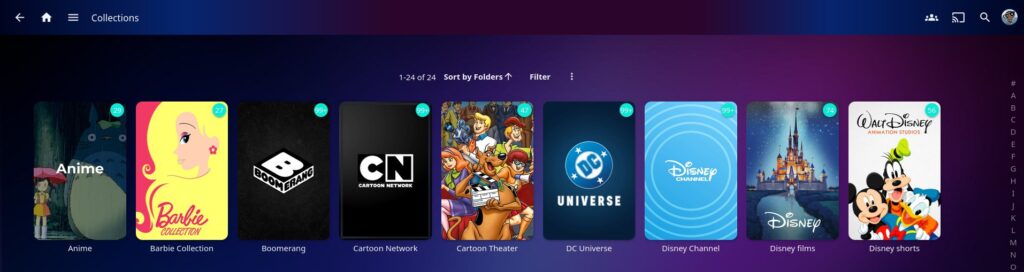
I hoped the lawsuit might be a last minute reprieve, or at least with meaningful concessions made. Unfortunately, that isn’t the case; as such, Bugs Bunny, Superman, and Scooby-Doo will be “coworkers” of SpongeBob, Captain Kirk, and the “South Park” cast.
As I’ve noted before, I’ve long since canceled Paramount+ and HBO Max. Between buying my favorite Paramount and Warner Bros. franchises on DVD/Blu-ray (Scooby-Doo, Star Trek, DC Comics, etc.), and setting up a Jellyfin server, I don’t need either service.
I also note most of Warner Bros.’s most lucrative franchises and characters are very old; there’s 80+ years’ worth of movies, comics, and TV shows to draw from for enjoying Superman, Batman, Looney Tunes, etc. While I know HBO’s “Lanterns” has its fans, it’s still based on a concept created when FDR was president, with the modern version coming along when Eisenhower was president (in Hal Jordan’s case). The same goes for some of Paramount’s franchises and characters—”South Park” has been on the air continuously since the Clinton administration, while “Star Trek” just turned 60 years old this month.
Given all of the above, I don’t want or need to give the Ellisons a dime for these characters and properties, as much as I like them or feel the pull of nostalgia. For the foreseeable future, if I need something from the Ellison-owned Paramount/Warner Bros., I can get it from the public library, through buying used DVDs/Blu-rays, or through some other/third-party means. Or just ignore it and give my money/attention to media not owned by awful billionaires, such as independent/smaller creators or PBS.
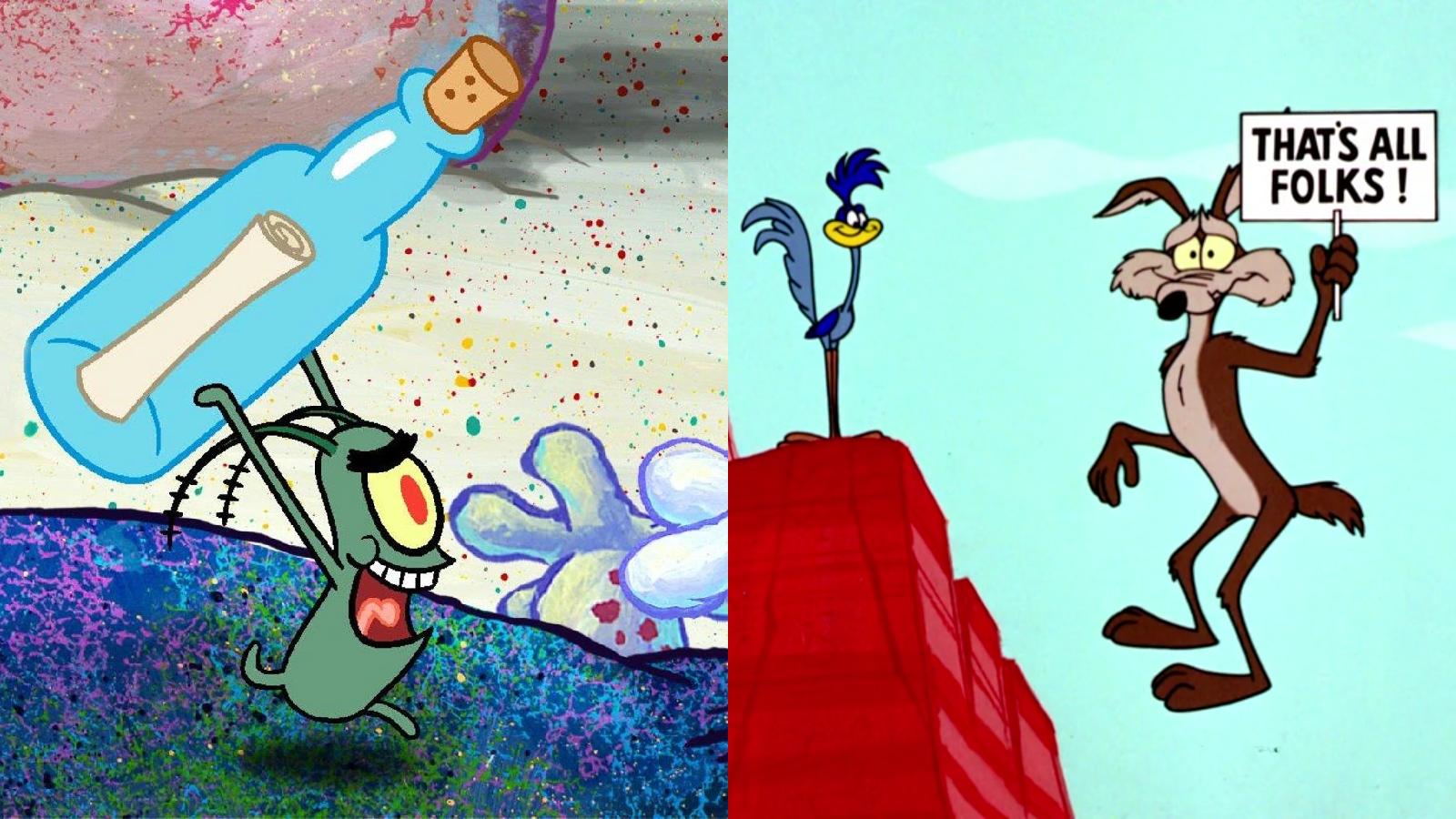
I guess this is where some articles would add “that’s all, folks.” I’d like to think things will improve in the future for the DC superheroes, Looney Tunes, and Cartoon Network characters—at least whenever they’re finally owned by better people than the Ellisons or David Zaslav. At least for me, that’s not all… as long as I have my own DVDs and hard drives.
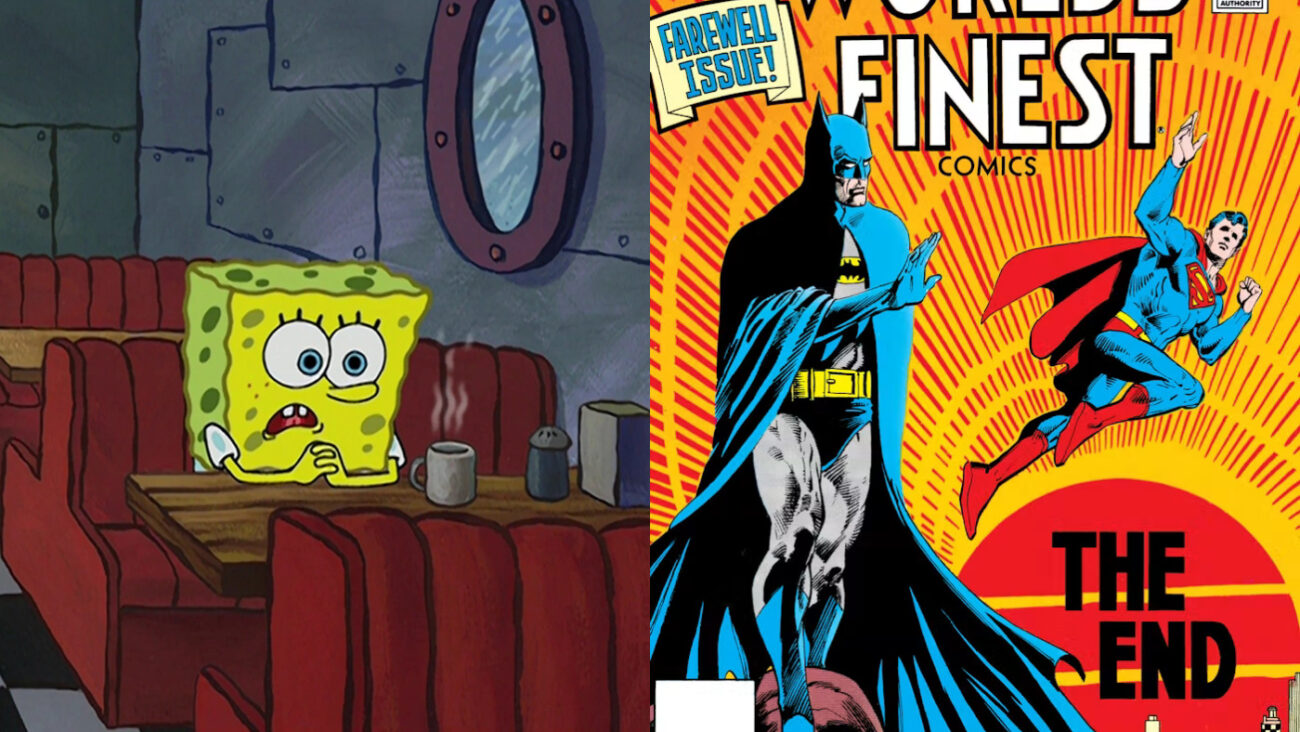
Image: “SpongeBob SquarePants” (Paramount) and “World’s Finest Comics” #323 (January 1986; art by Denys Cowan and Dick Giordano) (DC Comics)
Related Posts