
The state of technology and tech companies has weighed on my mind a lot lately. This is largely from seeing even well-liked software/tech services turn out to have something unseemly behind them, along with the usual tech suspects being… the usual tech suspects. Just looking at recent events:
- Sony has announced they’re deleting hundreds of films customers have digitally purchased, as well as ending production of physical media for the PlayStation (with some weird backtracking exception).
- The co-founder of Mullvad, a popular VPN (virtual private network) service, is revealed to be the main funder of a far-right anti-immigrant Swedish political party. Mullvad and a few others online have tried giving weak “we don’t agree but it’s his own money” defenses, but one guess where he got the money from to do that.
- The price of Plex’s lifetime pass as of July 1 is now $750, tripled from the already-hefty $250. Plex announced a new $250 tier good for five years.
- The skyrocketing cost of PC parts, including RAM and hard drives, thanks to the AI gold rush snapping up equipment. I recently purchased a new 8TB external hard drive, and my choice was largely out of it being one of the few affordable/reasonable options left. (My previous 4TB external hard drive has doubled in price from when I bought it.)
- Elon Musk recently became the world’s first trillionaire. Again, the wealthiest person alive is someone who turned Twitter into a right-wing cesspool, is mad there’s non-white versions of old cartoon characters, and feels people who look like me shouldn’t exist (unless they’re changing his trash).
And so on. Never mind: constant streaming service price hikes; WordPress’ Matt Mullenweg’s bizarre rent-seeking trademark lawsuits; the CEO of Mozilla (the developer behind Firefox), Brendan Eich, resigning (and going on to create the cryptocurrency-supporting Brave browser) after he donated money to a California anti-gay marriage campaign; etc.
Overall, it’s frustrating that much of the state of technology is controlled by some of the worst people alive, especially for an industry that prides itself on supposedly being run by intelligent, creative people. Trying to find tech options that aren’t owned by racists, aren’t cartoonishly greedy, aren’t shoving generative AI into everything, and respect users feels like it’s asking for the Moon. No wonder Google ditched its “don’t be evil” slogan… even with the bar on the ground, much of the tech industry still manages to trip over it.
Still, like I did recently for streaming and home video, I thought I’d try to think of the most ideologically “pure” or least problematic tech options; I’ve listed the best ones below. Note nothing’s perfect, but these seem like the best (or least terrible) options.
Criteria
My ideal criteria:
- The owners/founders aren’t known to be bigots.
- No open bootlicking to Trump/similar authoritarians.
- DRM-free.
- AI-free.
- Based on open standards.
- Not greedy.
Open-source software

Open-source software is often free to users (which is technically FOSS), but doesn’t have to be. It’s based on open standards, so users aren’t locked into a specific platform or piece of software. Technically inclined people can also contribute to said software’s development. Most projects also outright bar AI contributions and/or make AI based features strictly up to users to install on their own. That said, some open-source software isn’t as slick or user-friendly as proprietary options.
Among popular open-source software:
- Linux distributions such as Linux Mint and Fedora.
- LibreOffice.
- Firefox (though it’s taken some hits lately thanks to Mozilla) and its forks, such as LibreWolf and Waterfox.
- VLC media player.
Self-hosting/do-it-yourself (DIY)
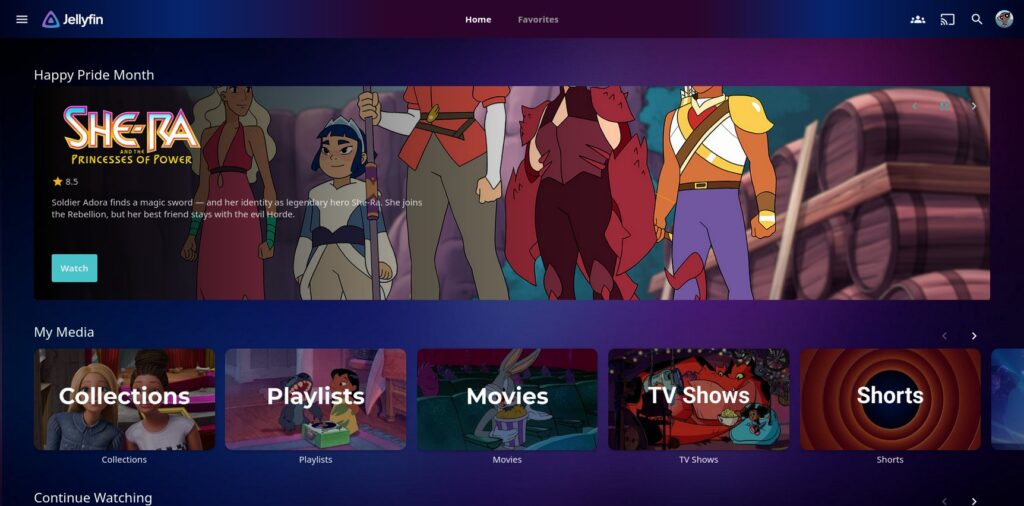
Self-hosting is one way to avoid subscriptions, and own one’s own software/services/media. One popular example is running a media server, such as Plex or Jellyfin; I run the latter. Hosting my own music, TV shows, and movies means content won’t be erased on a company’s whim, will run on all of my devices (no DRM), and isn’t directly supporting the likes of Joe Rogan (Spotify) or the Ellisons (Paramount/soon also Warner Bros.).
Unfortunately, the aforementioned AI craze means the cost of setting up a home server has gone up. There’s also the tech skills required to do this.
Another option that doesn’t require any skills or money is just going old-school: copying media files to one’s devices. Phones and tablets still have built-in media players (or third-party ones can be downloaded), and one can just copy MP3s and videos from one’s computer. No need to go buy a 90s-era cassette Walkman or find a still-functioning iPod.
Independent or smaller companies
Some independent or smaller tech companies avoid some tech downsides. They’re less likely to pull an Adobe and go the crass rent-seeking route, or start sucking up to authoritarian governments for corporate reasons.
That said, this still has downsides. Like open-source software, some mainstream corporate software might be all but required depending on one’s job. And as Mullvad’s situation reveals, being indie doesn’t mean the owners or founders aren’t some dollar-store Elon Musk wannabes.
Federated social media

Social networks that are based on open standards, such as Mastodon (based on ActivityPub) and Bluesky (based on AT Protocol), exist. While these have their own flaws, they do mean that they aren’t based on proprietary standards like Twitter or Facebook. Even if a racist billionaire tries to get involved, someone can always fork it into their own social network.
Creative Commons or public domain licensed media

Media licensed for Creative Commons use, or that’s entered the public domain, is an option for creators. Instead of using AI to generate images, one can just use stock photos from any number of online sources. Said images are also free, with some type of attribution or usage requirements depending on the Creative Commons license.
DRM-free media

DRM-free media avoids one’s media being locked to a specific company. It doesn’t matter if the media’s owners sell their company to private equity interests at the first sign of money dangled in front of them, or the owners want to delete it from their servers for as a tax write-off/residual dodge—the media is yours outright.
Unfortunately, DRM-free media varies in availability. Music is pretty much all DRM-free, and can be bought from various sources (Bandcamp, Apple Music, CDs, etc.). Comics have some DRM-free options, but superhero fans are out of luck, as DC and Marvel are owned by Warner Bros./Disney. Meanwhile, Hollywood would sooner jump off a cliff than make any of their TV shows or movies DRM-free, so options there require third-party workarounds (such as ripping DVDs and Blu-rays).
Conclusion
The above options aren’t perfect. Some require spending some money, having tech skills/learning new skills, and/or aren’t as convenient as mainstream options. Still, they do seem like the best options among the Googles, Facebooks, and Adobes of the world. I can’t guarantee the people behind the aforementioned tech aren’t trying to be the next Peter Thiel or Sam Altman, or don’t secretly want to send all Black/LGBTQ people to Mars, but anything helps.
Again, it’s also why the tech industry needs vast improvements in diversity. It’s important the tech industry see more involvement by people of color (especially underrepresented Black and Latino people), LGBTQ folk, and women, if its problems are to be fixed.
Photo by RealToughCandy.com (Pexels)
Related Posts




This is a really thoughtful breakdown, appreciate you laying out the tradeoffs instead of just picking a ‘winner.’ Slightly off topic, but as a new parent I’ve been relying on health apps and calculators way more than I expected – this due date calculator was one of the more useful ones early on: https://bumpbites.health/calculators/due-date