Last updated on March 25th, 2025
Female characters often weren’t cast as the main or solo stars during theatrical animation’s Golden Age, nor during television’s earlier years. Usually, they were in supporting roles to male characters, such as pet owners (Granny of “Looney Tunes”), their girlfriends or wives (Olive Oyl, Daisy Duck, Wilma Flintstone), or part of ensemble casts (Natasha Fatale on “Rocky and Bullwinkle”). Notable exceptions included Paramount’s “Little Lulu” and “Little Audrey” shorts of the 1940s and 1950s, as well as Fleischer Studios’ Betty Boop and several of Disney’s feature-length films (“Snow White,” “Cinderella,” and “Sleeping Beauty”).
Things slowly started to change in the 1960s and 1970s. Today, there are plenty of animated cartoons starring girls or women, from “Dora the Explorer” to “Tuca & Bertie.”
Below, I take a look at the first women to be the main or solo stars created for American TV animation. My criteria:
- I’m just looking at US animation.
- The characters need to be created for television, versus being from licensed properties, comics, or theatrical animation. That said, King Features Syndicate produced a series of “Krazy Kat” shorts for TV syndication between 1962 and 1964, where Krazy is depicted as female (versus male or genderfluid as in the original George Herriman comics).
If I missed an earlier character, feel free to let me know.
Winsome Witch (shorts)
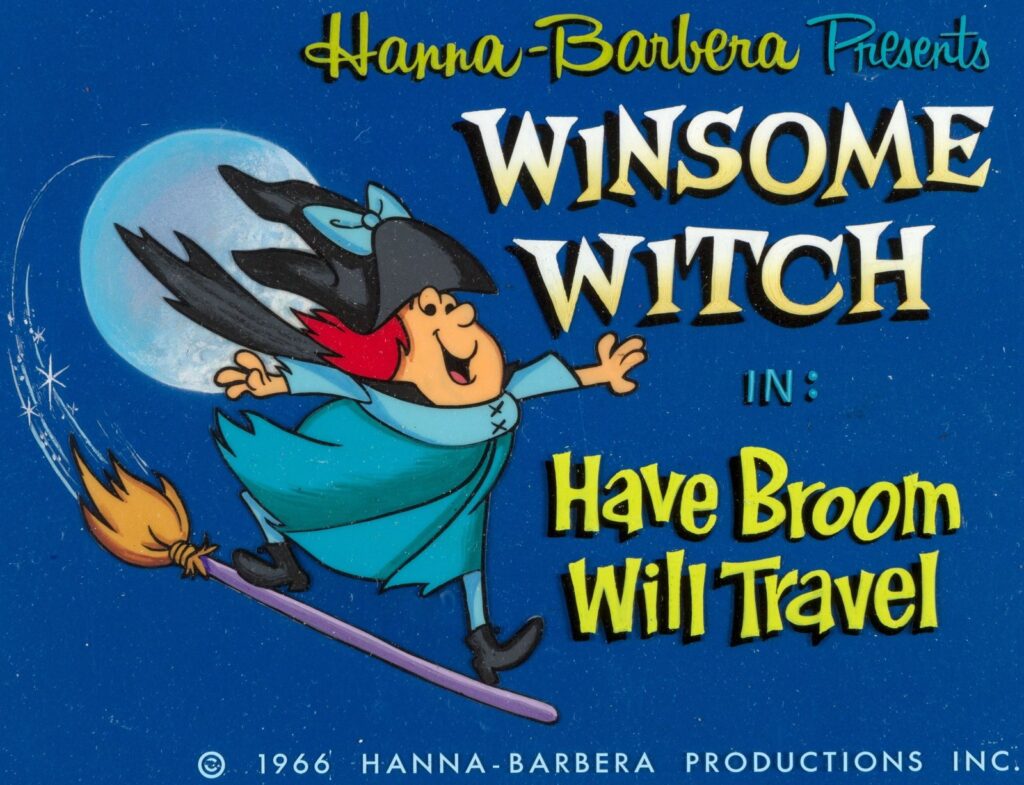
Winsome Witch (nicknamed “Winnie”) is a Hanna-Barbera character who debuted in 1965 as a supporting segment on “The Secret Squirrel Show.” Her original voice actor is Jean Vander Pyl, better known as the voice of Wilma Flintstone.
Winnie is a kind-hearted but occasionally bumbling witch who uses her witchcraft powers to help others. This ranges from trying to help a Little League team to taking part in various fairy tales. One episode even sees the Pentagon summon Winnie to help combat an enemy spy.
The other signature aspect of Winnie’s series is her magic phrase (“ippity-pippity-pow!”) and the accompanying sound effect when she uses her powers. It’s the same sound effect as Jet Screamer’s introduction cue from “The Jetsons.”
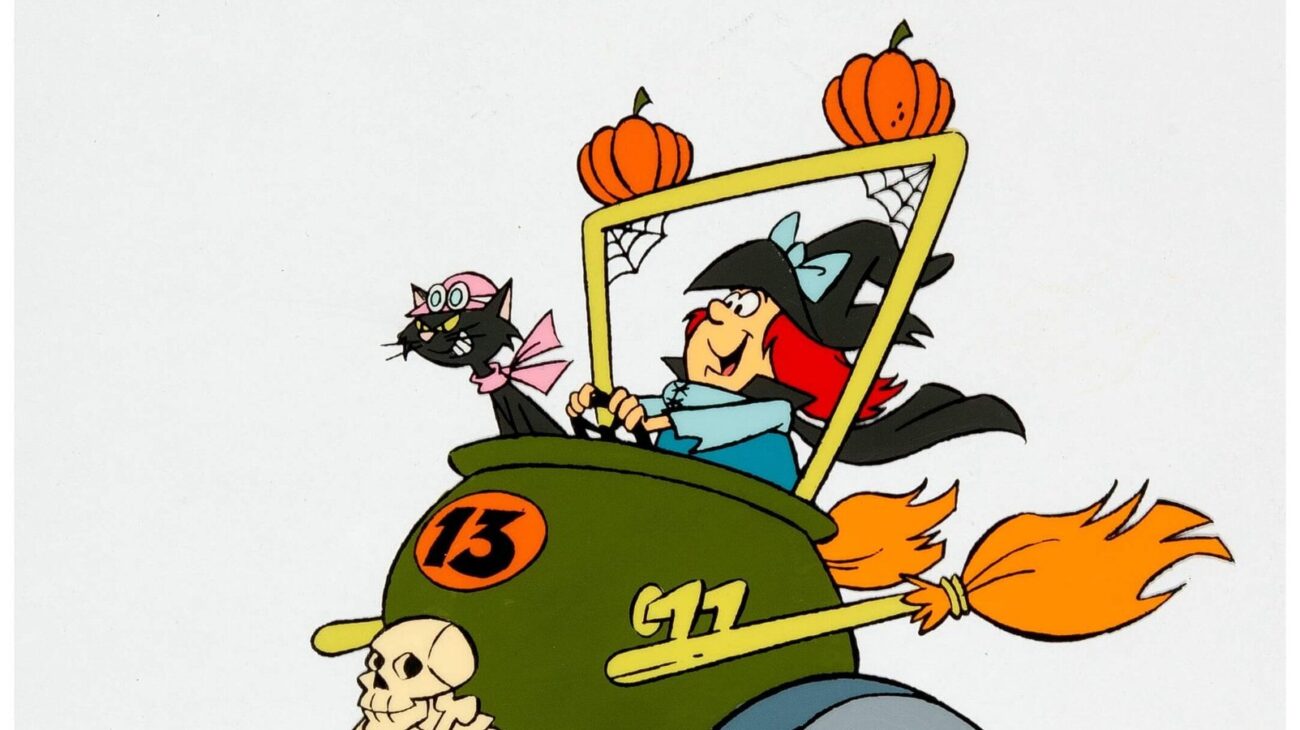
Winnie’s appeared in a few successor series, starting with the early 90s series “Fender Bender 500,” a “Wacky Races”-style series of shorts involving classic Hanna-Barbera characters racing in zany monster trucks. Here, Winnie drives a car dubbed the “Sonic Broom,” a cauldron-shaped vehicle with a talking skeleton attached. Her racing partner’s a pet black cat named Lucky. Winnie would occasionally use her magic to overcome some obstacle. Speaking of “Wacky Races,” Winnie also made an appearance in its 2017 reboot.
Winnie’s also a recurring character in “Jellystone!.” Here, she has a British accent, as she’s voiced by Lesley Nicol, a British actress better known for her role in “Downton Abbey.” One episode, “Face of the Town,” features an appearance of Winnie’s car from “Fender Bender 500.”
As for why a cartoon about a witch, perhaps Hanna-Barbera wanted to cash in on the success of “Bewitched,” which debuted a year earlier. The studio also did the animation for the sitcom’s opening credits. Of course, witch characters have stayed a TV animation mainstay to this day, from “Sabrina the Teenage Witch” to “The Owl House.”
On video
“The Secret Squirrel Show” is available on a DVD box set.
“Jellystone!” is streaming (as of this writing) on Max, but isn’t available on physical media.
There’s no English language physical media available for “Fender Bender 500,” though some have uploaded episodes to YouTube (including from a Japan-only LaserDisc release—remember those?). A few episodes (but not Winnie’s) of the 2017 “Wacky Races” series are available on DVD.
Opening credits
The closest to opening credits I can find is this bumper, which would’ve been run during “Secret Squirrel” as a lead-in to Winnie’s segment.
Penelope Pitstop (series)

“The Perils of Penelope Pitstop” debuted in 1969; the “Wacky Races” spin-off lasted one season of 17 episodes.
The series, set in what looks like the 1910s or 1920s, features Penelope (voiced by Janet Waldo) as the heir to a vast fortune. However, she’s placed into constant death traps by her guardian Sylvester Sneakley, who’s secretly the series’ villain, the Hooded Claw (voiced by Paul Lynde).
Coming to Penelope’s rescue are the Ant Hill Mob, her former “Wacky Races” competitors-turned-bodyguards. Given the Mob’s bumbling ways, however, Penelope would often end up rescuing herself (and the Mob) half of the time. The Ant Hill Mob’s 1920s-style car from “Wacky Races,” the Bulletproof Bomb, is renamed “Chug-a-boom” in this series, and is anthropomorphic (a la later Hanna-Barbera character Speed Buggy).
Post-”Perils,” Penelope is a main character in the 2017 “Wacky Races” revival. We also get introduced to her evil twin sister, Pandora Pitstop, who (like Dick Dastardly) is a mischievous racer.
The cast of “Perils” also appear in issue 41 of the DC Comic series “Scooby-Doo Team-Up.”
On video
“The Perils of Penelope Pitstop” is available on a DVD box set, as is the original “Wacky Races” series.
Opening credits
Here’s the opening credits to “The Perils of Penelope Pitstop.” There’s two versions that apparently exist, one with a then-modern music score and this version, clearly meant to evoke music from the silent movie era. Fitting, since the show’s a parody of the silent movie serial “The Perils of Pauline.”
Image: Winsome Witch, from “Fender Bender 500.” (Warner Bros.)
Related Posts